Ocean Futures / Attention into action
A Future Beyond the Silhouette
Wonder opens the door. Conservation asks what happens next: which pressures we reduce, which habitats we protect and how we know whether it works.
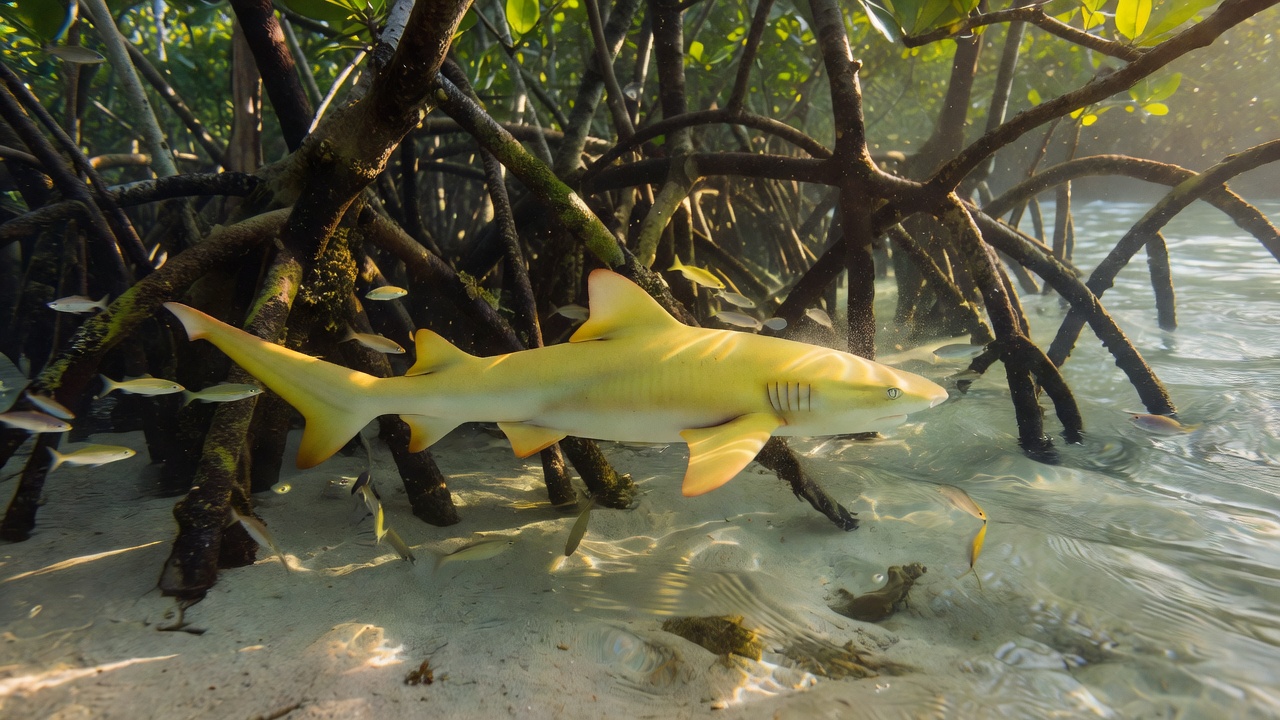
01 / Name the pressure
Not one threat. Not one solution.
Overfishing is a central driver of decline for many sharks, whether they are targeted directly or caught in fisheries seeking other species.
Sharks are caught for meat, fins and other products, as well as incidentally. A finning ban addresses the practice of removing fins and discarding the body; by itself, it does not prevent excessive shark mortality from retained catches or bycatch.
Life histories matter. Many sharks grow slowly, mature late and produce relatively few young. Not every species follows that pattern to the same degree, but for many it makes recovery a long process rather than a quick rebound.
Protection is a promise. Monitoring tells us whether that promise reaches the water.
Habitat degradation and climate change add pressures that vary by region and species. Loss of suitable nursery habitat, shifts in temperature and changes in prey availability can interact with fishing rather than replace it as a concern.
02 / Match the measure to the problem
Make protection more than a boundary.
A protected area can help when its location, rules and enforcement match the lives of the animals it is intended to protect.
A small coastal refuge may safeguard a nursery while leaving adults exposed elsewhere. Highly mobile species can need coordinated fisheries management across borders. Science-based catch controls, monitoring and measures to reduce incidental deaths belong alongside habitat protection.
03 / Test the claim
What would recovery look like?
Look for evidence over time: changes in abundance, survival, size structure and fishing mortality. Landings alone can be misleading because fishing effort, reporting and regulations also change.
Good conservation reporting names the species, place and time period. It explains how observations were collected and what remains uncertain. A global headline cannot tell you whether a particular local population is improving.
04 / A practical next step
Let curiosity become a better question.
Ask where seafood comes from
Seek species-level identification and information on fishing location and method. Consult current, region-specific seafood guidance; the label “sustainable” needs evidence behind it.
Choose wildlife encounters carefully
Look for operators that follow local regulations, keep appropriate distances and avoid touching, chasing or feeding sharks. An animal’s normal behavior matters more than a close photograph.
Support work that measures outcomes
Look for transparent research methods, community involvement and clear reporting. Fisheries observers, local scientists and coastal communities all contribute knowledge that protection needs.
Share the species, not the stereotype
Name the animal. Describe its habitat. Cite the evidence. Accurate attention is a small act, but it changes the kind of conversation that follows.