Species Stories / Three ways to be a shark
Not One Shark, but Many Stories
A spotted giant. A wide-headed wanderer. A patient presence on the sand. Step beyond the silhouette and the differences begin to glow.
01 / Rhincodon typus
Whale shark: a constellation in motion
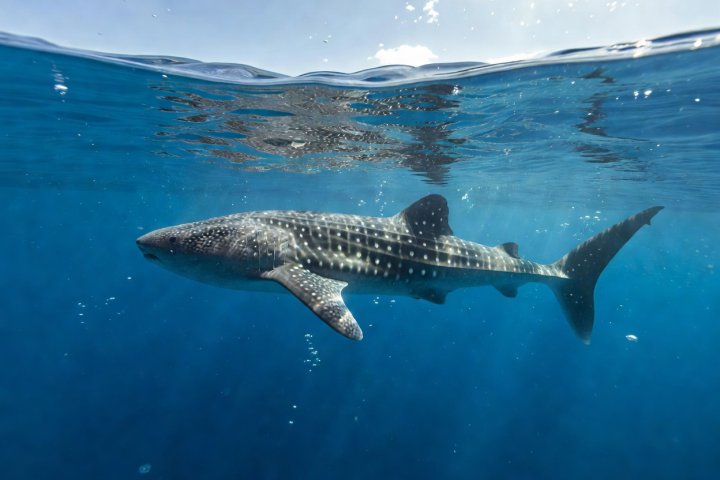
White spots scatter over dark skin like a night sky that has learned to swim.
The whale shark is the largest living fish, yet much of its food is small: plankton and other tiny animals, alongside small schooling fish. Water enters its broad mouth and passes through a filtering apparatus as the animal feeds.
- Habitat
- Tropical and warm-temperate seas; coastal and offshore waters.
- Feeding approach
- Filter feeding, including active suction and swimming with the mouth open.
Individual spot patterns can help researchers recognize the same animal in photographs. Those repeated encounters help reveal movements and the use of seasonal feeding areas.
Surface feeding also brings exposure to vessels. Responsible viewing means following local rules, keeping distance and never touching, chasing or feeding the animal.
02 / Sphyrna lewini
Scalloped hammerhead: the ocean, spread wide
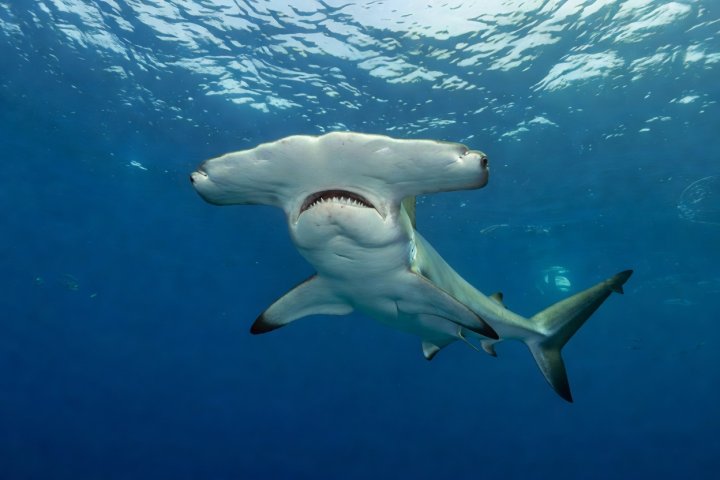
Its head opens sideways, turning a familiar fish shape into something almost architectural.
The expanded head is called a cephalofoil. It spreads sensory structures across a broad area and contributes to the shark’s distinctive visual field. Exactly how its different advantages interact in the wild remains an active research question.
- Habitat
- Warm coastal and offshore waters; young often use shallow coastal areas.
- Food
- Fish, squid and other prey, varying with size and location.
Scalloped hammerheads form schools in some places, but schooling does not mean every animal spends its whole life in a group. Individuals move among habitats, and patterns vary by age, sex and region.
Fishing pressure is a major conservation concern. Protection must account for both coastal nursery areas and the larger waters used later in life.
03 / Ginglymostoma cirratum
Nurse shark: the slower rhythm of the reef
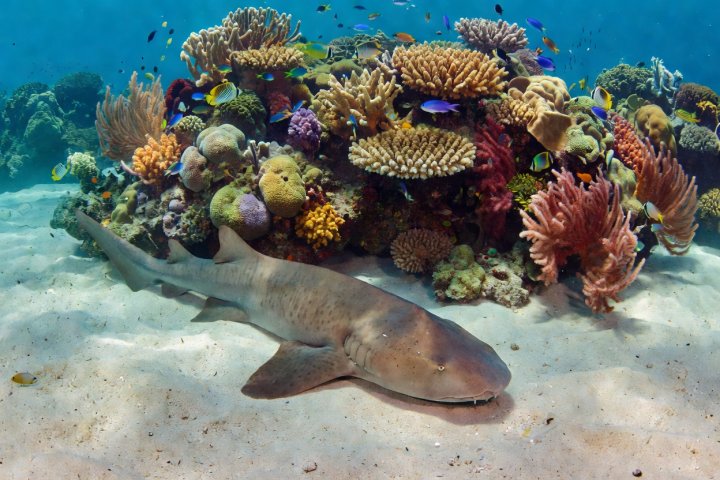
On the sand, stillness is not an absence of life. It is part of the schedule.
Nurse sharks often rest during the day and become more active at night. Barbels near the nostrils help them investigate the seabed; strong suction helps draw food into the mouth.
- Habitat
- Warm Atlantic and eastern Pacific coastal waters, including reefs and sandy shallows.
- Food
- Bottom-associated prey such as crustaceans, mollusks and fish.
Unlike sharks that rely on swimming to move water over their gills, nurse sharks can actively pump water while resting. There is no universal rule that every shark must keep swimming.
A resting animal is not an invitation to approach. Give it space, keep hands away and leave its shelter undisturbed.
Field notes & sources
These are introductory profiles, not identification or wildlife-handling instructions. Behavior varies between individuals and places.